The Hidden Layer of AI That Finally Started to Make Sense to Me
Craig Bramscher
I have been trying to understand why AI sometimes feels like magic and other times feels like a really confident intern who completely missed the point.
That sounds sarcastic, but I mean it honestly.
Some days I use these tools and feel like I am looking at the future. Other days I spend twenty minutes explaining context, correcting misunderstandings, re-uploading files, restating goals, and basically rebuilding the same workflow from scratch for the tenth time that week.
For a while I thought the answer was simple. Bigger models. Smarter models. Better reasoning. More memory. Just wait six months and everything improves.
But over the last few weeks I started realizing the problem was not only the intelligence of the model itself. The problem was everything around it.
Then I listened to one of Nate’s Substack breakdowns on Codex plugins, MCP servers, skills, hooks, connectors, and all the weird vocabulary that has started showing up around AI agents lately.
And somewhere in the middle of it, I felt the fog start to clear.
Not because I suddenly understood every technical detail. I definitely don’t. But for the first time, I understood the shape of what is happening.
The model is not the whole system anymore.
The model is becoming the brain inside a larger operating environment.
And I think that changes everything.
Why This Finally Clicked for Me
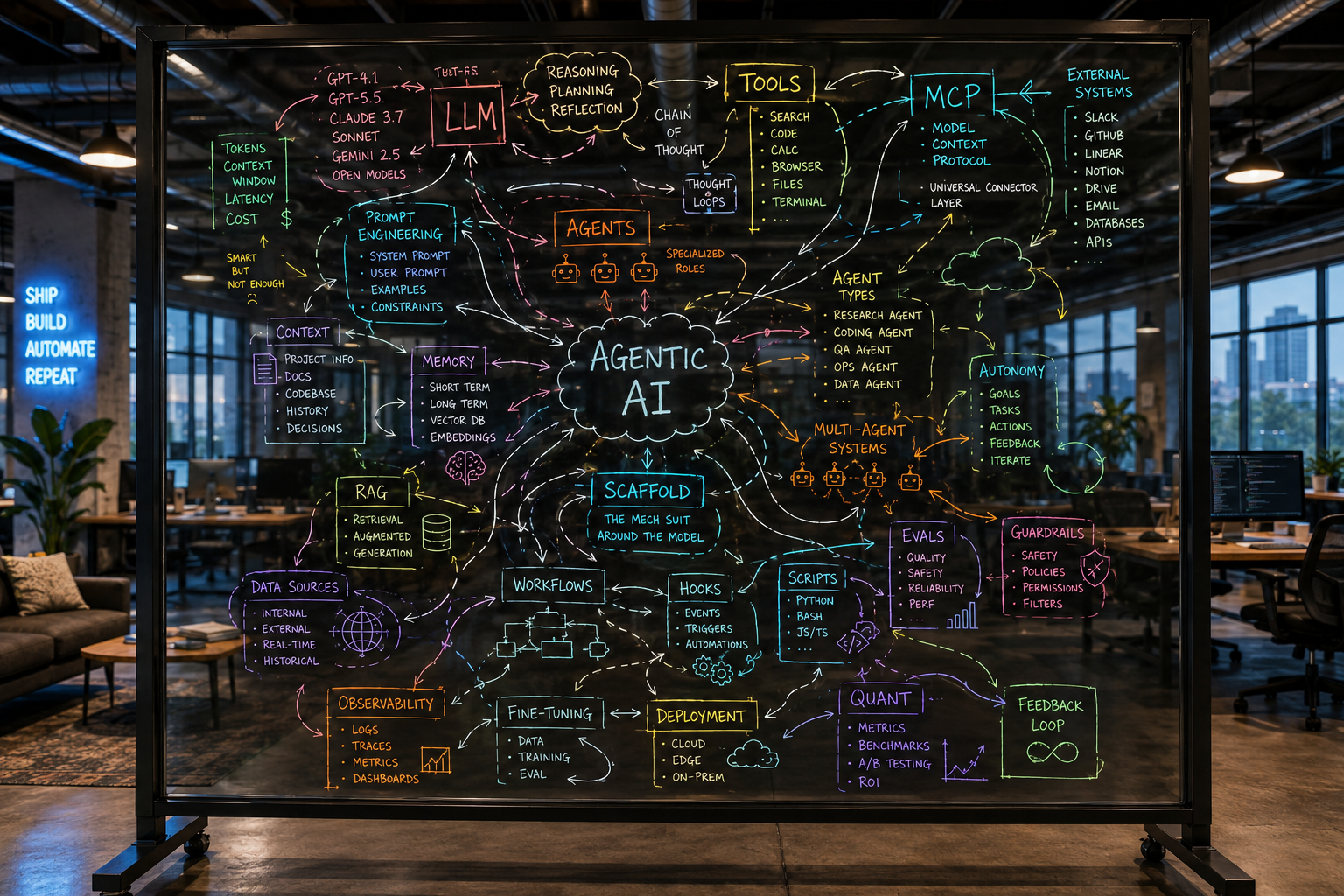
Nate used an analogy that stuck in my head. He described the AI model like Darth Vader inside the suit. The intelligence matters, but the suit is what allows it to actually operate in the world.
That instantly made more sense to me than all the engineering jargon.
The prompts.
The workflows.
The memory.
The tools.
The scripts.
The integrations.
The standards.
The permissions.
The process rules.
That is the suit.
That is the part that turns a smart model into something useful.
And suddenly a lot of things I had been struggling with started to make sense.
The Real Bottleneck Changed
One of the biggest ideas in Nate’s article is that GPT-5.5 got smart enough that the bottleneck moved.
That line hit me hard because I realized it perfectly described my own experience.
The AI itself is now good enough that the weakness is often the workflow around it.
The system can reason. It can code. It can summarize. It can plan. It can use tools. It can stay inside longer tasks much better than it could even a year ago.
But every time I start a new session, I still find myself rebuilding the environment around the task.
I explain where the files are.
I explain what standards matter.
I explain which systems are authoritative.
I explain the process.
I explain what mistakes to avoid.
Then I do it all over again tomorrow.
At some point you realize the human has become the operating system.
And honestly, that is exhausting.
From Prompts to Packaging
This is where something finally clicked for me.
I think the next major shift in AI is moving from prompts to packaged workflows.
That sounds technical, but I do not think it really is.
A prompt is temporary.
A workflow persists.
A prompt says:
“Do this.”
A packaged workflow says:
“This is how we do this every time.”
That is a massive difference.
A skill can contain the standards for a PR review. A plugin can carry the workflow, the tools, the permissions, and the systems needed to perform that review repeatedly. An MCP server can connect the AI to the actual systems where the work lives.
Once you start seeing it that way, the future of AI starts looking much less like chatting with a bot and much more like building operational systems.
That is where things start to get really interesting.
Why This Matters So Much for Business
The reason I got excited about this is because I immediately started thinking about real businesses.
Not demos.
Not AI toys.
Actual operational companies.
Take property management. Most property management companies are not failing because people are lazy or incompetent. They fail because the operational complexity becomes overwhelming. Too many moving pieces. Too many follow-ups. Too many systems. Too many opportunities for something small to get missed.
The software stores the information, but the humans carry the workflow.
That is the hidden truth in a lot of industries.
Now imagine packaging that operational knowledge into reusable systems.
A leasing workflow.
An owner communication workflow.
A maintenance coordination workflow.
An inspection workflow.
Not prompts.
Operational memory.
Suddenly the AI is not just answering questions. It is inheriting part of the operational structure of the business itself.
That feels very different to me.
The Difference Between Intelligence and Structure
One thing Nate said really stuck with me. Stronger AI without clear workflows just creates faster wrongness.
That is such a good way to describe what many people are experiencing right now.
The AI can do more than ever before, but if the structure around the work is vague, the system can confidently do the wrong thing at incredible speed.
That is why the workflow layer matters so much.
The model is no longer the only product.
The structure around the model is becoming the product too.
I Think AI Is Becoming an Environment
This may sound strange, but I do not think we are heading toward a future where people just sit around writing giant prompts.
I think we are moving toward AI environments.
Places where workflows live.
Where memory persists.
Where tools connect.
Where operational standards become reusable.
Where systems improve over time instead of resetting every session.
The more I think about it, the more this feels like the real story underneath all the AI headlines.
Not just smarter models.
Smarter operational scaffolding around the models.
The Part That Gets Me Most Excited
Honestly, the most exciting part to me is that this rewards people who deeply understand how work actually happens.
Not just engineers.
Operators.
Managers.
Entrepreneurs.
Editors.
Property managers.
People who understand where workflows break, where communication fails, where standards drift, and where human coordination starts collapsing under complexity.
Because those people are the ones who understand what should actually get packaged into these systems.
That knowledge suddenly becomes incredibly valuable.
A Thought Going Forward
I think we are watching the beginning of a pretty major transition.
First came prompts.
Then came workflows.
Now workflows themselves are becoming products.
Reusable. Persistent. Installable. Shareable.
And I suspect the companies that learn how to package their operational knowledge into these systems are going to move very differently over the next few years.
Not because they have a slightly smarter AI model.
Because their systems will remember how the work is supposed to happen.
That feels like a much bigger shift than most people realize.
Originally published at bramscher.com.