Pondering AI – more than a tool?
Craig Bramscher

Over the past few months I’ve been spending late nights experimenting with something most small and mid-sized businesses don’t yet realize is about to change their operating model:
they’re about to get staff they never have to hire.
Not chatbots.
Operators.
I’ve been working with OpenClaw — an open-source LLM agent framework — and the real breakthrough wasn’t just that it could run AI locally or cheaply. The breakthrough was this:
Businesses don’t need “an AI.”
They need a department.
We kept seeing a pattern. Every company — property management, trades, manufacturing, service companies — runs on the same operational loops:
• inbound communication
• triage and routing
• task creation
• the endless daily work
And today all of it is still human bottlenecks.
So instead of building a custom AI solution for each company, we started building a dashboard framework — a reusable operational layer — where OpenClaw agents plug into predefined workflows.
In other words:
we’re not deploying an assistant…
we’re deploying an AI operations team.
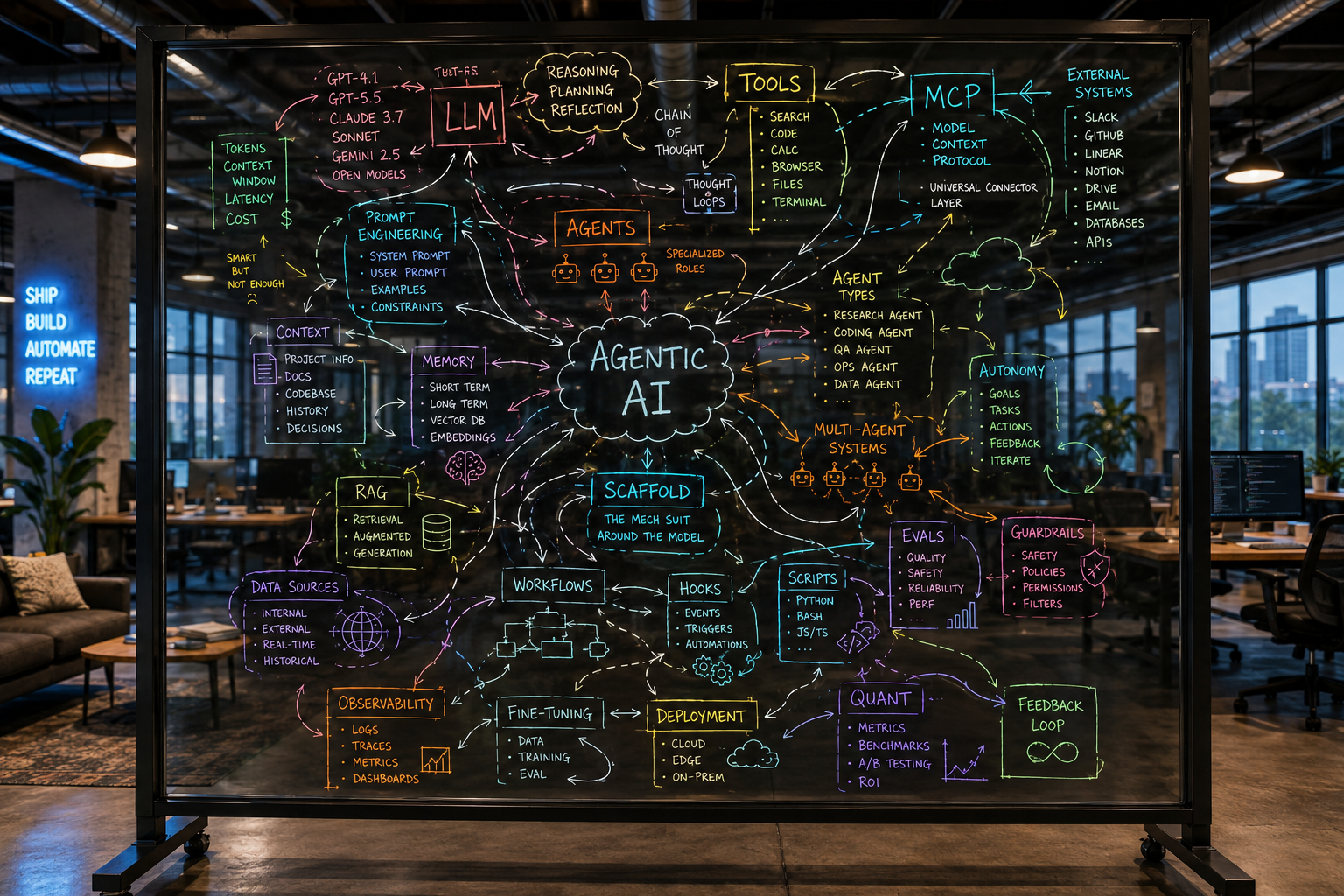
Here’s the architecture idea that changed everything:
The expensive frontier models (GPT-class) should not do the labor.
They should do the thinking.
So we separate AI into two layers:
Decision Layer (Frontier Models)
Planning, judgment, ambiguity resolution, orchestration.
Execution Layer (Local Open-Source Models via OpenClaw)
Monitoring inboxes
Answering customers/tenants
Reading documents
Creating work orders
Following up
Updating systems
Generating reports
Operating 24/7
Why this matters:
Frontier tokens are powerful — but costly.
Open-source models are cheap — but weaker at reasoning.
Combine them correctly and you get something new:
A business can run continuously without watching the token meter.
Local agents handle 90% of repetitive operations.
Frontier models step in only when judgment is required.
That changes the ROI math.
Instead of:
“Can AI replace a job?”
The better question becomes:
“Which functions of my business should be autonomous?”
We’re designing dashboards for common business types — property management, service contractors, and operational SMBs — so deployment becomes weeks, not months.
Here’s the uncomfortable truth:
Most businesses aren’t limited by sales.
They’re limited by operational friction.
AI doesn’t just automate tasks.
It removes cognitive load from owners and operators.
And when you remove cognitive load, leaders can lead again.
What surprised me most:
This isn’t futuristic anymore.
It’s implementable right now using open-source tools.
We’re still early, but for the first time I see a path where small businesses get enterprise-level operational infrastructure without enterprise-level cost.
And that may be AI’s most important economic impact.
Curious:
What part of your business consumes the most mental energy every day? BramOpenClaw Server Icon…
Originally published at bramscher.com.